
Laminectomy vs Discectomy: What's the Difference?
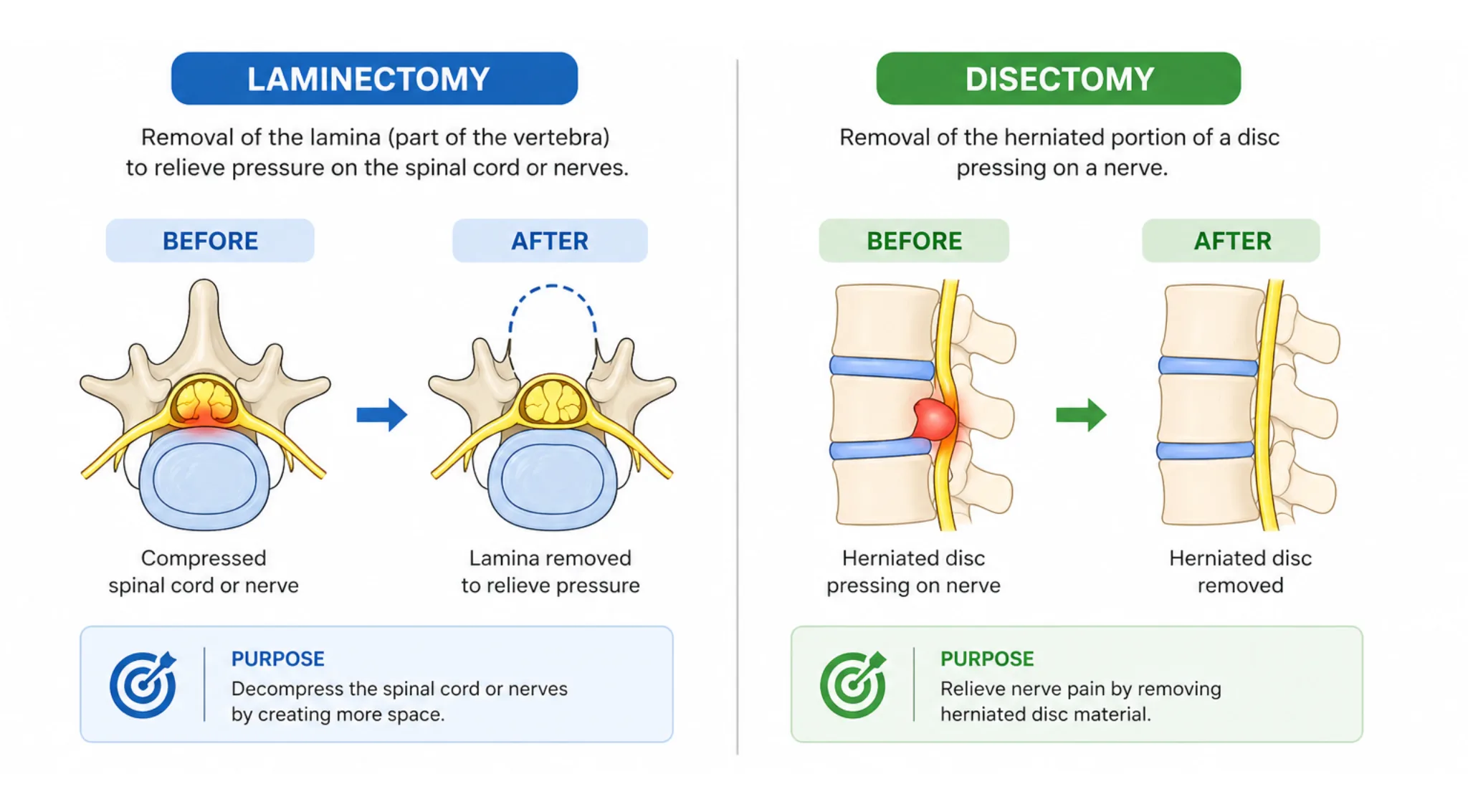

If you’ve been advised to consider spinal surgery, terms like laminectomy and discectomy can feel unfamiliar and concerning. Both procedures are commonly used to relieve pressure on spinal nerves, often in the lower back, but they address different underlying problems.
This guide explains the differences between laminectomy and discectomy in a clear, evidence-based way, helping you understand why one may be recommended over the other and what to expect from treatment.
Understanding the Spine and Nerve Compression
The spine is made up of vertebrae (bones), intervertebral discs (soft cushions), and a central canal that houses the spinal cord and nerves.
Nerve compression occurs when something presses on these nerves, which can lead to pain, numbness, or weakness often affecting the back, buttocks, or legs (commonly referred to as sciatica).
Two common causes of nerve compression are:
- Disc herniation (slipped disc)
- Spinal stenosis (narrowing of the spinal canal)
Laminectomy and discectomy are surgical procedures designed to relieve this pressure, but they do so in different ways.
What Is a Discectomy?
A discectomy is a surgical procedure to remove part of a damaged or herniated disc that is pressing on a nerve.
When Is It Used?
It is most commonly recommended for:
- Herniated (slipped) discs
- Sciatica caused by disc compression
- Persistent leg pain not improving with conservative treatment
How It Works
The surgeon removes the portion of the disc that is bulging or pressing on the nerve. In many cases, this is performed as a microdiscectomy, using minimally invasive techniques and a microscope for precision.
Key Aim
To relieve nerve pressure caused specifically by disc material.
What Is a Laminectomy?
A laminectomy involves removing part or all of the lamina, which is the back portion of a vertebra. This creates more space within the spinal canal.
When Is It Used?
It is commonly recommended for:
- Spinal stenosis (narrowing of the spinal canal)
- Nerve compression due to bone overgrowth or thickened ligaments
- Leg pain or weakness linked to narrowing rather than a disc problem
How It Works
By removing part of the bone, the surgeon enlarges the spinal canal and reduces pressure on the nerves.
Key Aim
To relieve nerve compression caused by narrowing of the spinal canal.
Key Differences Between Laminectomy and Discectomy
| Feature | Discectomy | Laminectomy |
|---|---|---|
| Main target | Intervertebral disc | Lamina (bone of vertebra) |
| Common cause treated | Herniated/slipped disc | Spinal stenosis |
| Goal | Remove disc pressing on nerve | Create space by removing bone |
| Typical symptoms | Sciatica (leg pain from disc) | Leg pain, numbness, or weakness from narrowing |
| Surgical approach | Often minimally invasive | May be open or minimally invasive |
In some cases, both procedures may be performed together if multiple structures are causing nerve compression.
Symptoms That May Lead to Surgery
Both procedures may be considered when symptoms include:
- Persistent leg pain (sciatica)
- Numbness or tingling in the legs
- Muscle weakness
- Difficulty walking or standing for long periods
Red Flags Requiring Urgent Medical Attention
Seek immediate medical care if you experience:
- Loss of bladder or bowel control
- Numbness around the genitals or buttocks
- Severe or worsening weakness in the legs
These may indicate a serious condition such as cauda equina syndrome.
How Are These Conditions Diagnosed?
Assessment typically includes:
- Medical history and symptom review
- Physical examination (including nerve function)
- Imaging tests such as MRI scans, which are particularly useful for identifying disc problems and spinal narrowing
Not all patients with these findings require surgery. Many improve with non-surgical care.
Treatment Options Before Surgery
Surgery is usually considered only after conservative treatments have been tried, unless symptoms are severe.
Conservative Management
Physiotherapy
Pain relief medication
Activity modification
Exercise programmes
Interventional Treatments
Spinal injections (e.g., epidural or nerve root injections)
These approaches may help manage symptoms and delay or avoid surgery.
Surgical Considerations
Benefits
-
Relief from nerve-related leg pain
-
Improved mobility and function
-
Potential improvement in quality of life
Risks
As with any surgery, there are risks, including:
-
Infection
-
Bleeding
-
Nerve injury
-
Recurrence of symptoms
-
Persistent pain
Your surgeon will discuss these in detail and tailor recommendations to your specific condition.
Recovery and Outcomes
Recovery varies depending on the individual and the procedure performed:
- Many patients notice improvement in leg pain relatively soon after surgery
- Full recovery may take weeks to months
- Physiotherapy is often recommended after surgery
Outcomes are generally favourable when patients are carefully selected and surgery is performed for appropriate indications.
Prevention and Long-Term Care
To support spinal health and reduce the risk of recurrence:
- Maintain a healthy weight
- Stay physically active
- Strengthen core muscles
- Practise good posture
- Avoid prolonged sitting
- Use proper lifting techniques
When to Seek Medical Advice
You should seek medical advice if:
- Back or leg pain persists beyond a few weeks
- Symptoms are worsening
- You experience numbness, tingling, or weakness
- Pain is affecting your daily activities or sleep
Key Takeaway
Laminectomy and discectomy are both well-established procedures used to relieve pressure on spinal nerves, but they are designed to treat different underlying problems.
A discectomy focuses on removing disc material causing nerve compression, while a laminectomy creates more space in the spinal canal by removing part of the bone.
Understanding these differences can help you make informed decisions and have more meaningful discussions with your healthcare provider.
Appointments
📧 contactspinecare.uk@gmail.com
📞 07771112322