
Text Neck Syndrome: Symptoms, Causes, Treatment and Prevention
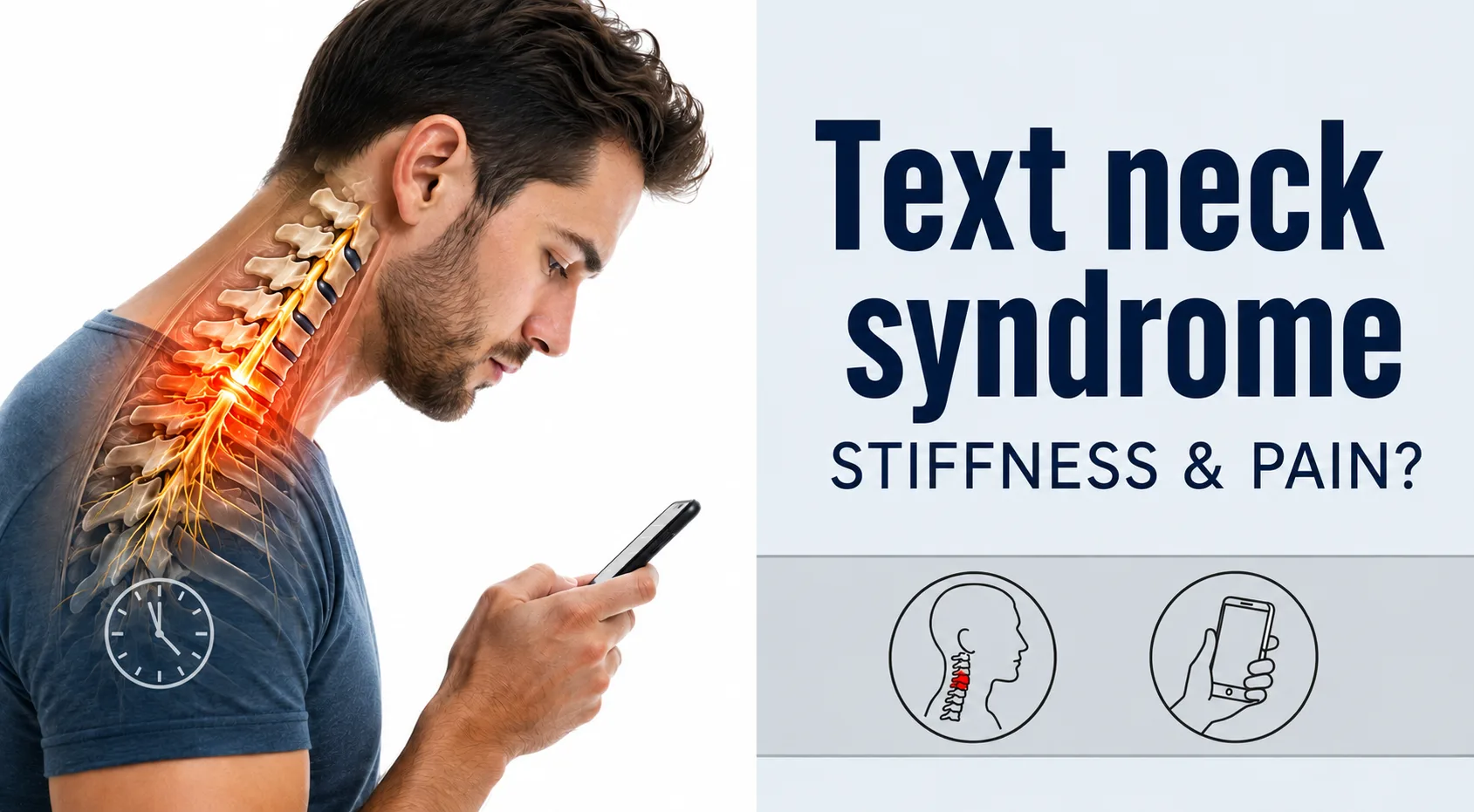

Smartphones, tablets, laptops, and other digital devices have become part of everyday life. While these technologies offer many benefits, spending long periods looking down at a screen can place excessive strain on the neck and upper back. This PROLONGED FORWARD posture is commonly referred to as text neck syndrome.
Although text neck syndrome is not a formal medical diagnosis, it describes a pattern of neck pain and discomfort associated with prolonged forward head posture during device use. Left unaddressed, it may contribute to muscle strain, headaches, reduced neck mobility, and, in some cases, irritation of nearby nerves.
Understanding the symptoms, causes, and treatment options can help you reduce discomfort, improve posture, and protect your spinal health.
What Is Text Neck Syndrome?
Text neck syndrome refers to neck pain and related symptoms caused by repeatedly bending the head forwards while using smartphones, tablets, laptops, or other handheld devices.
The human head weighs approximately 4.5–5.5 kg in a neutral position. As the head tilts forwards, the forces acting on the cervical spine increase considerably, placing additional strain on the muscles, ligaments, joints, and discs in the neck.
Why Does It Happen?
The human head weighs approximately 4.5–5.5 kg when held in a neutral position. As the head gradually tilts forward, the stress placed on the cervical spine increases significantly. Even a slight forward head posture can substantially increase the force exerted on the neck muscles, ligaments, and spinal structures. The greater the angle of head flexion, the heavier the effective load on the neck, which may contribute to neck pain, muscle strain, poor posture, and long-term spinal problems.
Approximate Force on the Neck at Different Head Flexion Angles
Head Flexion | Approximate Force on Neck |
0° (Neutral Position) | 5 kg |
15° | 12 kg |
30° | 18 kg |
45° | 22 kg |
60° | 27 kg |
Occasional device use is unlikely to cause long-term problems, but maintaining poor posture for extended periods over months or years may contribute to persistent neck pain and stiffness.
What Causes Text Neck Syndrome?
The condition develops gradually due to repeated stress on the cervical spine.
Common causes include:
- Looking down at a mobile phone for prolonged periods
- Using tablets without adequate support
- Poor workstation ergonomics
- Long hours working on a laptop
- Slouching while sitting
- Holding the phone between the shoulder and ear
- Spending long periods without movement breaks
Modern lifestyles often involve several hours of screen time each day, increasing the likelihood of developing posture-related neck symptoms.
Common Symptoms of Text Neck Syndrome
Symptoms vary from person to person and may develop gradually.
Common symptoms include:
Neck pain
Neck stiffness
Pain between the shoulder blades
Upper back pain
Shoulder discomfort
Muscle tightness
Headaches, particularly starting at the base of the skull
Reduced range of neck movement
Fatigue in the neck and shoulders
Symptoms often become more noticeable after prolonged screen use and may improve with movement or changes in posture.
Neck Pain and Stiffness
The most common symptom is a dull or aching pain in the neck.
You may notice:
Difficulty turning your head
Morning stiffness
Pain after using your phone for extended periods
Increased discomfort at the end of the day
Headaches
Poor neck posture can contribute to cervicogenic headaches, which originate from structures in the neck.
These headaches may:
Begin at the back of the head
Spread towards the forehead
Be accompanied by neck stiffness
Worsen after prolonged desk work or mobile phone use
Not all headaches are caused by neck problems, so persistent or severe headaches should be assessed by a healthcare professional.
Shoulder and Upper Back Pain
The muscles supporting the neck and shoulders work harder when the head is held in a forward position.
Over time, this may lead to:
Shoulder tension
Pain between the shoulder blades
Muscle fatigue
Reduced posture endurance
Can Text Neck Syndrome Cause Nerve Symptoms?
In some cases, prolonged poor posture may contribute to irritation of nerves in the cervical spine, particularly if there is an underlying spinal condition.
Possible symptoms include:
- Tingling in the arm or hand
- Numbness
- Pain travelling into the shoulder or arm
- Muscle weakness (less common)
These symptoms are not typical of simple muscle strain and should be assessed by a healthcare professional.
Who Is Most at Risk?
Anyone who spends long periods using digital devices may develop text neck syndrome.
Higher-risk groups include:
- Office workers
- Students
- Teenagers and young adults
- Remote workers
- Gamers
- People who frequently use smartphones
- Individuals with poor workstation ergonomics
When Should You Seek Urgent Medical Attention?
Text neck syndrome itself is not usually an emergency. However, seek urgent medical assessment if you experience:
- Severe neck pain following an accident or fall
- Weakness in the arms or hands
- Loss of coordination
- Difficulty walking
- Loss of bladder or bowel control
- Persistent numbness affecting the arms
- Fever with severe neck pain
These symptoms may indicate a more serious spinal or neurological condition.
How Is Text Neck Syndrome Diagnosed?
Diagnosis is usually based on:
Medical History
Your clinician will ask about:
Your symptoms
Daily screen use
Occupation
Exercise habits
Previous neck injuries
Physical Examination
Assessment may include:
Neck movement
Posture
Muscle tenderness
Shoulder function
Neurological examination where appropriate
Imaging
Most people do not require scans.
However, X-rays or MRI scans may be recommended if symptoms suggest nerve compression, significant structural problems, or another underlying condition.
Treatment Options
Treatment depends on symptom severity and how long symptoms have been present.
Activity and Posture Modification
Small changes to your daily routine often make a significant difference.
These include:
Holding devices at eye level
Avoiding prolonged neck flexion
Taking regular movement breaks
Improving workstation ergonomics
Physiotherapy
Physiotherapy is commonly recommended and may include:
Postural correction
Stretching exercises
Strengthening the neck and upper back muscles
Mobility exercises
Ergonomic advice
Pain Relief
Short-term pain relief medication may be recommended where appropriate to help manage symptoms alongside exercise and physiotherapy.
Is Surgery Ever Needed?
Surgery is not a treatment for text neck syndrome itself.
However, if investigations identify another spinal condition, such as significant cervical disc disease or nerve compression, specialist assessment may be appropriate.
Prevention
The best treatment is often prevention.
You can reduce your risk by:
- Holding your phone at eye level
- Taking breaks every 20–30 minutes
- Maintaining good sitting posture
- Adjusting your computer monitor to eye height
- Exercising regularly
- Strengthening your upper back and core muscles
- Limiting prolonged screen time where possible
Small, consistent changes in posture and workstation setup can make a meaningful difference over time.
When Should You See a Specialist?
Arrange an appointment if:
- Neck pain lasts longer than a few weeks
- Symptoms keep returning
- Pain interferes with work or sleep
- You develop tingling or numbness in your arm
- Weakness develops in your arm or hand
- Self-care measures have not improved your symptoms
Early assessment can help identify whether symptoms are due to muscle strain or another spinal condition.
Conclusion
Text neck syndrome is becoming increasingly common as screen time continues to rise. Although it often begins as mild neck stiffness or discomfort, persistent poor posture may contribute to chronic pain, headaches, and reduced neck mobility.
Fortunately, most people improve with simple measures such as improving posture, adjusting their workstation, taking regular breaks, and following an appropriate exercise programme. If symptoms persist or neurological symptoms develop, seeking medical advice can help identify the underlying cause and ensure appropriate treatment.
Mr Prasad Karpe
Specialising in cervical radiculopathy, slipped discs, spinal stenosis, and minimally invasive spinal surgery across the North East of England.
Disclaimer
This article is for informational purposes only and does not replace professional medical advice, diagnosis, or treatment. Work ability and activity recommendations vary depending on the severity of symptoms and the underlying spinal condition.