
Can Abdominal Organs Cause Back Pain? Understanding Referred Pain
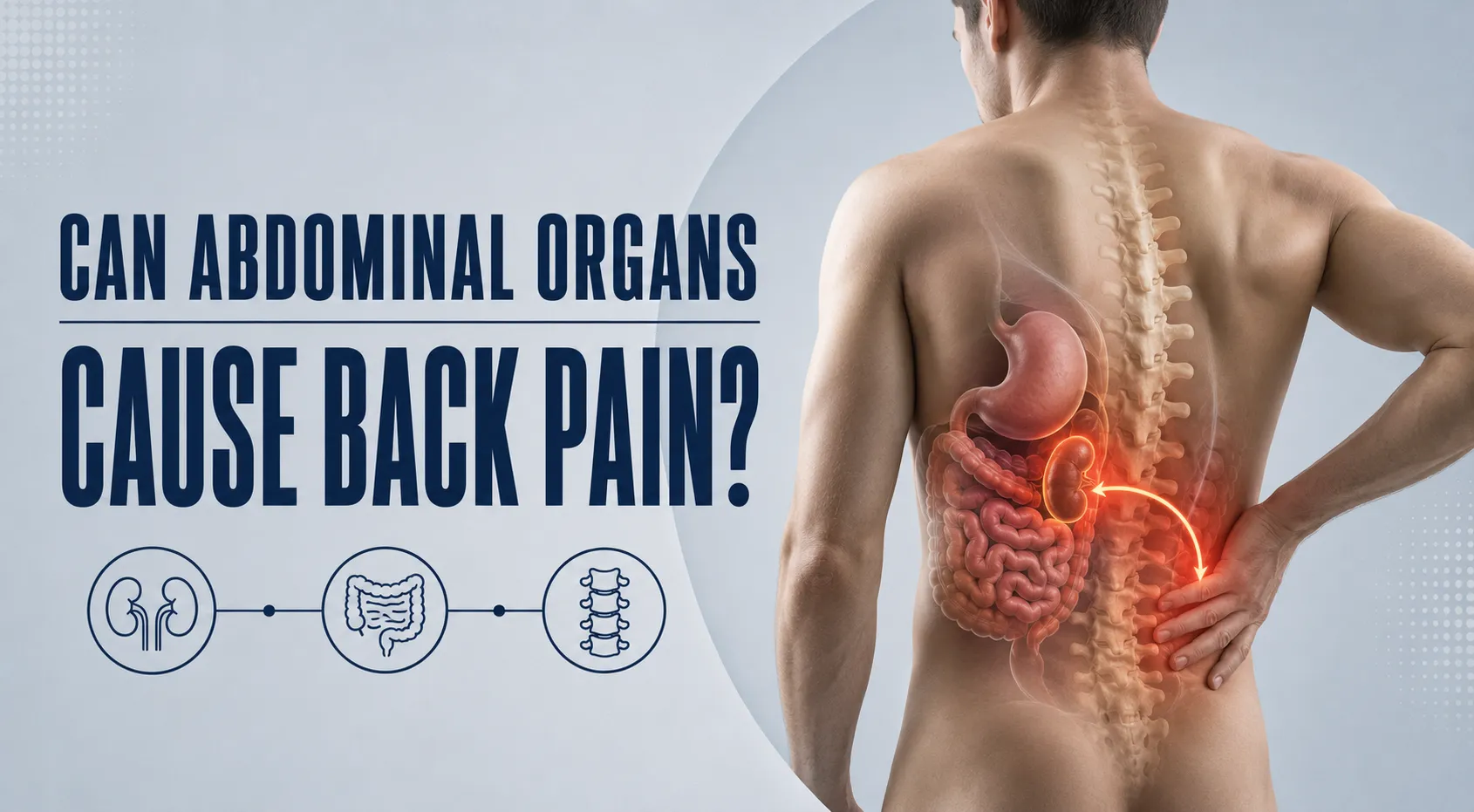

Back pain is often linked to muscles, joints, discs, or the spine itself. However, not all back pain originates from the back. In some cases, problems affecting the abdominal organs can cause pain that is felt in the back.
This may occur through referred or radiating pain, where pain arising from an internal structure is felt in or towards the back.
While most episodes of back pain are caused by musculoskeletal conditions and improve with time, persistent back pain accompanied by abdominal symptoms or other warning signs should be assessed by a healthcare professional.
This article explains whether abdominal organs can cause back pain, which organs are most commonly involved, how organ-related pain differs from spinal pain, and when to seek medical attention.
Can Abdominal Organs Cause Back Pain?
Yes. Several organs within the abdomen and pelvis can cause pain that radiates to the back.
Unlike back pain caused by muscles or spinal problems, pain from abdominal organs is often accompanied by other symptoms such as nausea, fever, changes in bowel or bladder habits, or abdominal discomfort.
Conditions involving the following organs or structures may cause back or flank pain:
- Kidneys and urinary tract.
- Pancreas
- Gallbladder and biliary system
- Stomach and upper gastrointestinal tract
- Intestines
- Aorta and major blood vessels
- Pelvic and Female reproductive organs
Most back pain is musculoskeletal, but pain arising from internal organs should be considered when symptoms are unusual, severe, associated with other symptoms, or don’t behave like typical mechanical back pain.
How Does Referred Pain Occur?
Sensory signals from internal organs and somatic structures can converge on shared pathways within the nervous system. As a result, the brain may sometimes perceive pain arising from an internal organ in another area of the body
As a result, pain originating in an abdominal organ may be perceived in the:
- Lower back
- Mid-back
- Upper back
- Flank (side of the body)
This explains why some people with kidney stones or gallbladder disease initially believe they have a back problem.
Which Abdominal Organs Can Cause Back Pain?
The location and nature of the pain — and any associated symptoms — can provide important clues.
Kidneys and Urinary Tract
Conditions affecting the kidneys or urinary tract can cause pain in the flank or back, usually beneath the ribs.
Examples include:
Kidney stones
Kidney infections
Urinary tract obstruction
Other symptoms may include:
Severe pain that comes and goes in waves
Pain travelling towards the groin
Fever or chills
Pain or burning when passing urine
Blood in the urine
Nausea or vomiting
Pancreas
Acute pancreatitis typically causes severe pain in the upper abdomen, which may spread through to the back.
Other symptoms can include:
Severe upper abdominal pain
Nausea and vomiting
Fever
Abdominal tenderness
Suspected acute pancreatitis requires urgent medical assessment.
Gallbladder and Biliary System
Gallstones and gallbladder inflammation can cause pain in the upper abdomen, particularly on the right side.
The pain may sometimes spread towards the back or right shoulder blade.
Associated symptoms can include:
Upper abdominal pain
Nausea or vomiting
Fever
Jaundice in some biliary conditions
Stomach and Duodenum
Conditions affecting the stomach or duodenum, including peptic ulcer disease, can occasionally cause upper abdominal pain that is also felt towards the back.
Associated symptoms may include:
Upper abdominal discomfort or burning
Indigestion
Nausea
Symptoms related to eating
Sudden severe abdominal pain, vomiting blood or passing black stools requires urgent medical attention.
Bowel and Intestinal Conditions
Some abdominal and bowel conditions can occasionally produce discomfort that extends towards the back.
However, back pain alone is not a typical presentation of most bowel disorders.
Associated symptoms such as:
Persistent abdominal pain
Changes in bowel habit
Abdominal bloating or distension
Fever
Blood in the stool
may indicate that the symptoms require further assessment.
Abdominal Aorta
An abdominal aortic aneurysm (AAA) is an enlargement of the main artery running through the abdomen.
Most AAAs cause no symptoms and are discovered through screening or investigations performed for another reason.
However, a symptomatic or rupturing aneurysm can cause sudden, severe abdominal or back pain.
Seek emergency medical attention for sudden severe abdominal or back pain associated with symptoms such as:
Dizziness or fainting
Collapse
Loss of consciousness
Feeling very unwell
A ruptured AAA is a medical emergency.
Female Reproductive and Pelvic Organs
Some gynaecological conditions can cause pelvic or abdominal pain that is also felt in the lower back.
Examples include:
Endometriosis
Ovarian cysts
Pelvic inflammatory disease
Fibroids
The pattern of symptoms varies depending on the underlying condition and may include pelvic pain, changes in menstruation, abnormal bleeding or other gynaecological symptoms.
How Can You Tell If Back Pain Is Coming From an Internal Organ?
It isn’t always possible to determine the source of back pain from its location alone.
Back pain associated with fever, urinary or bowel symptoms, persistent abdominal pain, unexplained weight loss, significant night symptoms or feeling generally unwell deserves further assessment.
Sudden severe abdominal or back pain, particularly with dizziness, fainting or collapse, requires urgent medical attention.
A clinical assessment can help distinguish common musculoskeletal back pain from symptoms that may require investigation for another cause.
How Is Organ-Related Back Pain Different from Spinal Back Pain?
| Pain from an Internal Organ May: | Musculoskeletal/Spinal Pain May: |
|---|---|
| Feel deep, diffuse or difficult to localise | Be more clearly localised to the back |
| Be less consistently affected by movement or posture | Change with certain movements, positions or activities |
| Occur alongside abdominal or pelvic symptoms | Be related to physical activity or loading |
| Be accompanied by nausea, vomiting or fever | Usually occur without systemic symptoms |
| Occur with urinary, bowel or gynaecological symptoms | Sometimes radiate into the buttock or leg |
| Persist despite changing position | Sometimes improve or worsen with particular positions |
These patterns can provide clues, but they cannot reliably determine where pain is coming from. Some spinal pain can be constant or unrelated to movement, while pain from internal organs can sometimes change with position.
When Is Back Pain More Likely to Be Spinal?
Most back pain is musculoskeletal rather than arising from internal organs. Learn more in 5 Causes of Lower Back Pain.
Common spinal causes include:
- Muscle strain
- Degenerative disc disease
- Disc bulges
- Sciatica
- Lumbar spinal stenosis
- Osteoarthritis of the spine
These conditions typically worsen with certain movements and improve with appropriate treatment, though this pattern alone does not determine the cause.
Red Flag Symptoms
Seek urgent medical attention if back pain is associated with:
- Sudden severe abdominal pain
- Collapse or fainting
- Loss of bladder or bowel control
- Sudden or significant weakness in the legs
- Severe pain following significant trauma
- Severe pain accompanied by feeling acutely unwell
Other symptoms, such as unexplained weight loss, persistent fever, blood in the urine, or persistent vomiting, should also prompt medical assessment.
How Is the Cause Diagnosed?
Your clinician will begin by asking about:
- The location of the pain
- When it started
- What makes it better or worse
- Associated symptoms
- Medical history
Depending on the findings, investigations may include:
- Blood tests
- Urine tests
- Ultrasound scan
- CT scan
- MRI scan (if a spinal condition is suspected)
- Endoscopy in selected cases
Treatment
Treatment depends entirely on the underlying cause.
- Medication, including antibiotics when appropriate
- Pain relief and supportive treatment
- Treatment for kidney or urinary conditions
- Medication for gastrointestinal conditions
- Surgery or other procedures for certain abdominal conditions
- Physiotherapy and rehabilitation for musculoskeletal causes
- Specialist spinal treatment when appropriate
The appropriate treatment depends on identifying the underlying cause rather than assuming that all back pain originates from the spine.
When Should You See Medical Advice?
Most episodes of back pain are not caused by a serious underlying condition. However, you should seek medical advice if your pain:
- Is persistent or progressively worsening
- Is associated with abdominal, urinary or bowel symptoms
- Is accompanied by fever or feeling generally unwell
- Is associated with unexplained weight loss
- Is persistent at night or repeatedly wakes you from sleep
- Is unusual for you or causing concern
Seek urgent medical attention for sudden severe abdominal or back pain, particularly if accompanied by dizziness, fainting, collapse or feeling very unwell.
A clinical assessment can help determine whether your symptoms are coming from the spine, the surrounding musculoskeletal structures, or another part of the body.
Conclusion
Back pain can sometimes originate from organs or structures outside the spine. Conditions affecting the kidneys, pancreas, gallbladder, gastrointestinal tract, pelvic organs or major blood vessels can occasionally cause pain that is felt in or radiates towards the back.
However, most back pain is musculoskeletal. The pattern of pain, associated symptoms and clinical examination can help determine whether the source is spinal or potentially coming from elsewhere.
Recognising unusual or concerning symptoms is important so that the underlying cause can be assessed and treated appropriately.
If you have persistent or unusual back pain, particularly when accompanied by abdominal, urinary, bowel or neurological symptoms, a clinical assessment can help identify the likely cause and guide appropriate management.
Disclaimer
This article is for general information only and does not replace professional medical advice. If you have concerns about your symptoms, please consult a qualified healthcare professional.