
Slipped Disc Symptoms: Signs, Causes, Diagnosis and Treatment
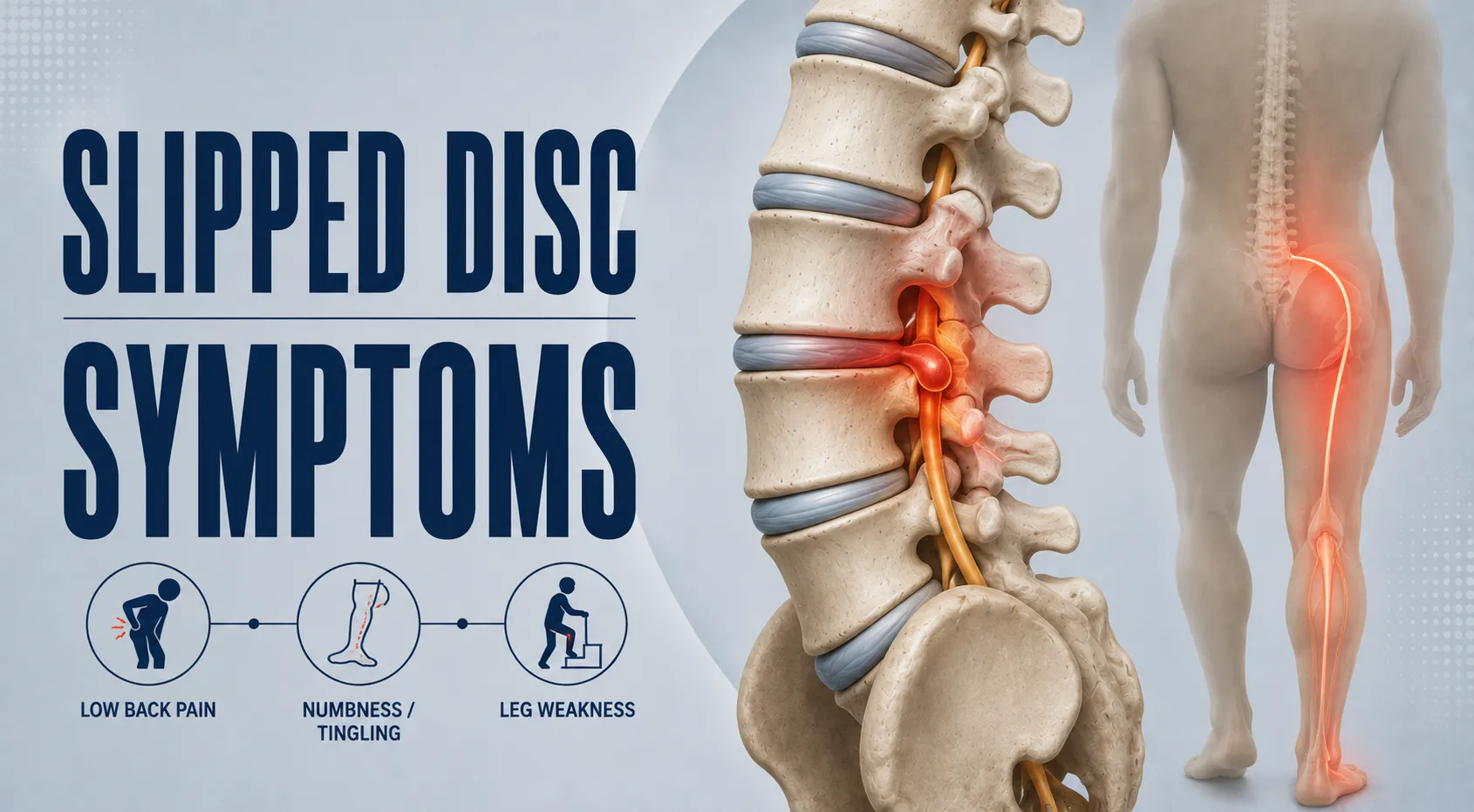

A slipped disc, or disc herniation, is a common cause of sciatica and other nerve-related symptoms. It may also be associated with back pain. Despite its name, the disc does not actually “slip” out of place. Instead, the disc material extends beyond its normal boundaries through the outer part of the disc., sometimes pressing on nearby nerves.
Some people with a slipped disc have no symptoms at all, while others experience severe pain, numbness, tingling, or muscle weakness that affects their daily activities.
Recognising symptoms can help you understand when medical assessment may be appropriate, particularly if neurological symptoms develop.
This guide explains the symptoms of a slipped disc, what causes it, how it is diagnosed, available treatment options, and when urgent medical attention is required.
What Is a Slipped Disc?
If you’re unfamiliar with the lower back, our guide What Does the Lumbar Spine Do? explains how the lumbar spine supports movement and absorbs everyday forces.
Each disc contains:
- A tough outer layer (annulus fibrosus)
- A soft, gel-like centre (nucleus pulposus)
A “slipped disc” is the commonly used term for a disc herniation or prolapse. Despite the name, the disc does not actually slip out of position. Instead, disc material extends beyond its normal boundary.
A disc herniation may cause no symptoms. Symptoms are more likely when the herniated material irritates or compresses a nearby nerve root.
What Are the Symptoms of a Slipped Disc?
Back Pain
Back pain associated with a disc herniation can vary considerably. It may begin suddenly or gradually and may change with certain movements or activities.
When a nerve root is affected, leg or arm symptoms may be more prominent than the spinal pain itself.
Sciatica
A lumbar disc herniation can cause sciatica when it irritates or compresses a nerve root. Pain typically radiates into the buttock and leg and may occur with or without significant lower back pain.Many people with a slipped disc develop sciatica. Learn how recovery progresses in Signs That Your Sciatica Is Improving.
Symptoms may include:
Sharp or burning pain
Electric shock-like sensations
Pain reaching the calf or foot
Pain affecting one side of the body
Numbness and Tingling
Pressure on a spinal nerve may cause:
Pins and needles
Reduced sensation
Numbness in the foot or hand
Altered sensation in the leg or arm
The exact area affected depends on the nerve involved.
Muscle Weakness
A compressed nerve can interfere with muscle function.
You may notice:
Difficulty lifting the foot
Weakness affecting the hand,arm,depending on the nerve involved.
Problems climbing stairs
Difficulty standing on tiptoes
Progressive weakness should always be assessed promptly.
Neck Symptoms
When a slipped disc occurs in the cervical spine, symptoms may include:
Neck pain
Shoulder pain
Arm pain
Tingling in the fingers
Hand weakness
A cervical disc herniation can cause neck and arm symptoms if a nerve root is affected. Less commonly, a large cervical disc herniation can compress the spinal cord (cervical myelopathy), which may cause problems with hand dexterity, balance or walking and requires specialist assessment.
What Causes a Slipped Disc?
Disc herniation usually develops through a combination of changes within the disc and mechanical loading. It may occur gradually or during a particular movement or activity, and there is often no single identifiable cause.. Learn more in 4 Stages of Disc Degeneration…no longer 4 stages as its edited for evidence based
Common causes include:
- Age-related disc degeneration
- Physically demanding work
- Smoking
- Excess body weight
- Genetic susceptibility
In many people, disc degeneration develops gradually over time before symptoms appear.
Risk Factors
You may have a higher risk if you:
- Age- Early to middle adulthood more common
- Perform manual work
- Smoke
- Are overweight
- Have a family history of disc disease
When Should You Seek Urgent Medical Attention?
Although most slipped discs improve without surgery, certain symptoms require immediate medical assessment.
Seek urgent medical attention if you develop:
- New difficulty starting or controlling urination, altered sensation when passing urine, loss of bladder or bowel control, or new bowel dysfunction
- Numbness around the buttocks or genitals (saddle anaesthesia)
- Rapidly worsening leg weakness
- Weakness affecting both legs
- Difficulty walking due to sudden neurological symptoms
These may be signs of cauda equina syndrome, which requires emergency treatment.
How Is a Slipped Disc Diagnosed?
Diagnosis usually begins with a detailed medical history and physical examination.
Your clinician may assess:
Muscle strength
Reflexes
Sensation
Walking pattern
Straight leg raise test
Imaging may include:
MRI Scan
MRI is the preferred imaging investigation when imaging is clinically indicated. However, an MRI is not routinely required for every episode of back pain or sciatica. Imaging is generally considered when the findings are likely to change management or when serious or progressive neurological pathology is suspected.
CT Scan
CT scanning may be recommended if MRI is unsuitable.
X-rays
X-rays cannot diagnose a slipped disc but may help identify other spinal conditions.
Treatment Options
Most slipped discs improve with conservative treatment.
Conservative Management
Treatment may include:
Staying active as tolerated
Physiotherapy
Pain relief medication
Activity modification
Temporary modification of aggravating activities
Physiotherapy
Physiotherapy often includes:
Physiotherapy may include an individualised exercise programme, advice about activity, graded return to normal function and strategies to help manage symptoms.
Spinal Injections
For persistent radicular pain, an epidural or targeted nerve-root steroid injection may be considered in selected patients. It may provide short-term relief of nerve-related pain, although the response varies between individuals.. Find out more in Do I Need an Injection for a Prolapsed Lumbar Disc?
Surgery
Surgery may be considered when:
Persistent leg or arm pain remains disabling despite appropriate non-operative treatment
There is significant or progressive neurological weakness
Clinical symptoms correspond with nerve compression demonstrated on imaging
Emergency decompression is required for conditions such as cauda equina syndrome
If surgery is recommended, our guide Laminectomy vs Discectomy: What’s the Difference? explains two common procedures used to treat spinal nerve compression.
Recovery
Many people with symptomatic lumbar disc herniation improve over several weeks, although recovery varies considerably between individuals. Symptoms such as numbness or weakness may take longer to recover than pain.
Following professional advice during recovery can help you return safely to everyday activities.
Can a Slipped Disc Be Prevented?
Not all disc herniations can be prevented. Genetics, ageing and other factors that cannot be modified contribute to disc health.
General measures that support musculoskeletal health include:
- Regular physical activity
- Maintaining strength and physical capacity
- Maintaining a healthy weight
- Not smoking
- Gradually building tolerance to demanding physical activities
When Should You See a Spinal Specialist?
Specialist assessment may be appropriate when:
Sciatica or arm pain remains significant despite appropriate treatment
Symptoms are progressively worsening
Muscle weakness or other neurological symptoms develop
Symptoms significantly interfere with everyday activities
Further investigation, injections or surgery are being considered
Conclusion
A slipped disc can cause a wide range of symptoms, from mild back pain to significant sciatica, numbness, and muscle weakness. While many people recover with physiotherapy, activity modification, and appropriate pain management, persistent or progressive neurological symptoms should always be assessed promptly.
Most people with a symptomatic disc herniation improve without surgery. Treatment should be guided by the pattern and severity of symptoms, neurological findings and, when appropriate, imaging results.
Progressive weakness or symptoms suggestive of cauda equina syndrome require urgent assessment.
If you are experiencing persistent back pain, sciatica, numbness, or weakness that may be related to a slipped disc, an assessment by a qualified spinal specialist can help identify the cause and discuss the most appropriate treatment options for your individual circumstances.
Disclaimer
This article is for general information only and does not replace professional medical advice. If you have concerns about your symptoms, please consult a qualified healthcare professional.