
L5 Nerve Root Compression: Symptoms, Causes, Diagnosis and Treatment
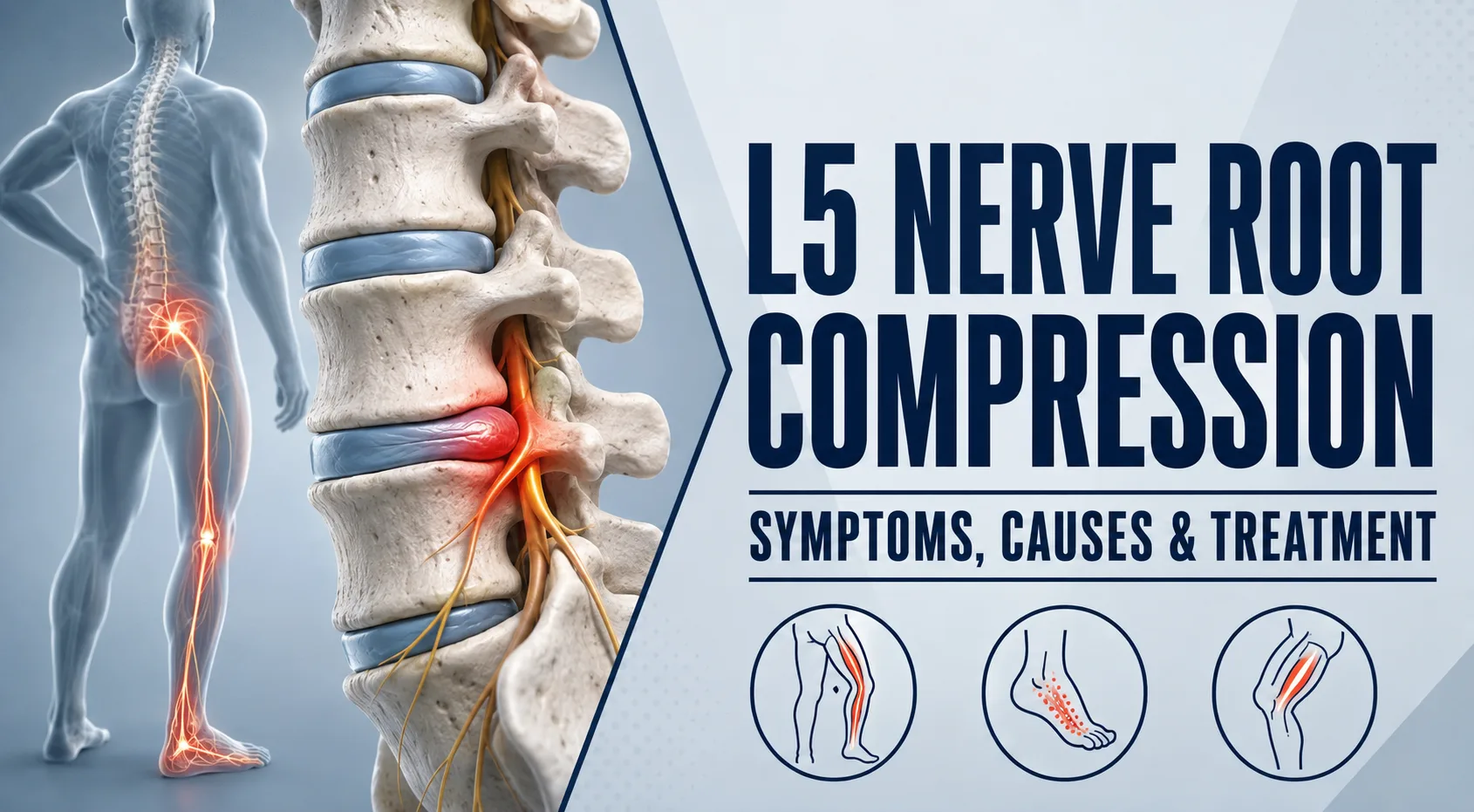

L5 nerve root compression occurs when pressure is placed on the nerve root associated with the fifth lumbar level of the spine. It can cause lower back pain, pain travelling into the buttock and leg, altered sensation, and weakness affecting movements controlled by the L5 nerve root.
The symptoms of L5 nerve root compression can differ from those associated with S1 nerve root compression. In particular, changes in sensation and muscle weakness tend to follow a different pattern.
A disc problem is a common cause of nerve root compression, although other conditions can also reduce the space available around a nerve. Recognising persistent or worsening symptoms can help ensure appropriate assessment and treatment.
This guide explains the symptoms, causes, diagnosis and treatment of L5 nerve root compression and outlines when medical assessment is important.
What Is the L5 Nerve Root?
The spinal nerves carry messages between the spinal cord and different parts of the body. Nerve roots leave the spinal canal through openings in the spine and contribute to the nerves that supply the legs and feet.
The L5 nerve root is associated with sensation and movement involving parts of the lower leg and foot. When the nerve root is compressed or irritated, symptoms may develop along its distribution.
L5 nerve root symptoms should not be confused with S1 nerve root symptoms. Although both can cause pain travelling down the leg, their sensory and motor patterns can differ.
What Causes L5 Nerve Root Compression?
A disc problem at the L5-S1 level can produce symptoms involving the lower back and leg; you can also read about L5-S1 disc bulge symptoms.
Several conditions can place pressure on a lumbar nerve root. Causes described in the original material include:
- A disc bulge
- Lumbar disc herniation
- Degenerative disc disease
- Bone spurs
- Lumbar spinal stenosis
- Thickened spinal ligaments
- Less commonly, spinal cysts or tumours
The exact cause of compression needs to be established through clinical assessment and, where appropriate, imaging.
L5 Nerve Root Compression Symptoms
Symptoms can vary between individuals and may affect one side of the body.
Possible symptoms include:
Lower back pain
Pain travelling into the buttock
Pain extending into the leg
Tingling or pins and needles
Numbness
Muscle weakness
Changes in foot movement
The exact pattern depends on the location and severity of nerve irritation or compression.
Symptoms may become more noticeable with activities or movements that increase pressure or irritation around the affected nerve.
L5-Related Pain
Pain associated with L5 nerve root compression may begin in the lower back and travel through the buttock and into the leg.
Patients may describe nerve-related pain as:
Sharp
Shooting
Burning
Electric shock-like
Deep aching
The distribution of pain can vary. Leg pain does not automatically indicate L5 nerve root compression, which is why assessment may be needed to determine which nerve root, if any, is involved.
Numbness and Tingling
L5 nerve root compression can affect sensation in areas supplied by the L5 nerve root.
Patients may experience:
Pins and needles
Numbness
Altered sensation in part of the lower leg
Altered sensation over the upper surface of the foot, including the area towards the big toe
Sensory symptoms can fluctuate depending on the individual and the underlying cause.
Because the sensory distribution of spinal nerves can overlap, the location of numbness alone cannot always identify the affected nerve root.
Muscle Weakness
Compression of the L5 nerve root can affect muscles involved in movements of the foot and ankle.
Possible signs of weakness may include difficulty with:
Lifting the foot upwards
Moving the big toe upwards
Certain movements involved in walking
Weakness can be particularly important clinically because it may indicate that the nerve is being affected more significantly.
Progressive or significant weakness should be assessed promptly.
Changes in Walking or Foot Movement
Changes in the strength or control of the foot can affect walking.
A person with L5 nerve root involvement may notice that certain foot movements feel weaker or that walking feels different. Difficulty lifting the front of the foot can be particularly relevant when assessing possible L5 nerve involvement.
However, changes in walking or foot movement can have several possible causes. They should therefore be assessed by an appropriately qualified healthcare professional rather than assumed to be caused by L5 nerve compression.
How Is L5 Nerve Root Compression Diagnosed?
Diagnosis usually begins with a medical history and physical examination.
Medical History
A clinician may ask about:
Where the pain is located
How long symptoms have been present
Whether pain travels into the leg
Any numbness or tingling
Any weakness
Previous back problems
Activities or movements that affect symptoms
Physical Examination
The examination may include assessment of:
Muscle strength
Sensation
Reflexes
Walking pattern
Leg movement
Straight leg raise
The findings help the clinician determine whether the symptoms are consistent with nerve root involvement and whether further investigation is required.
MRI Scan
MRI can provide detailed images of the discs, nerves and spinal canal and may be used when imaging is clinically indicated.
Other imaging, such as CT scans or X-rays, may occasionally be considered depending on the clinical situation.
An imaging finding does not necessarily explain every symptom, so scan results need to be considered alongside the clinical assessment.
Treatment Options
Treatment depends on the cause of the nerve root compression, the severity of symptoms and the individual’s clinical circumstances.
Conservative Management
Many patients with nerve-related back and leg symptoms may initially be managed without surgery.
Treatment may include:
Physiotherapy
Staying active within tolerable limits
Pain relief medication
Activity modification
The appropriate approach depends on the individual assessment.
Physiotherapy
Physiotherapy may focus on:
Core strengthening
Improving flexibility
Postural correction
Gradual return to activity
A physiotherapy programme should be appropriate to the individual’s symptoms and physical condition.
Injections
For some patients with persistent nerve-related pain, an injection for a prolapsed lumbar disc may be considered depending on the underlying cause.
Surgery
Surgery may be considered in some patients when symptoms persist despite appropriate non-surgical treatment, when weakness progresses, or when significant nerve compression is present.
Depending on the underlying cause, procedures may include a microdiscectomy, laminectomy or another form of decompression.
Surgery is not appropriate for every person with L5 nerve root compression. The decision depends on the clinical findings and the cause of the compression.
Recovery and Outlook
Recovery varies between individuals.
Factors that may influence recovery include:
- The severity of nerve compression
- How long symptoms have been present
- Overall health
- Participation in rehabilitation
Some patients improve with conservative treatment, while persistent or worsening symptoms may require further assessment.
Self-Care
If you are recovering from nerve-related back or leg symptoms, measures that may support your general recovery include:
- Staying as active as symptoms allow
- Following your physiotherapy programme
- Avoiding prolonged sitting
- Maintaining a healthy weight
- Stopping smoking if applicable
- Using safe lifting techniques
Self-care should not replace medical assessment when symptoms are persistent, worsening or associated with neurological changes.
Red Flag Symptoms
Seek urgent medical attention if you develop:
- Loss of bladder or bowel control
- Numbness around the buttocks or genitals
- Rapidly worsening leg weakness
- Difficulty walking because of sudden weakness
- Severe symptoms following major trauma
These symptoms require urgent assessment because they may indicate a serious spinal condition, including cauda equina syndrome.
When to Seek Medical Advice
Arrange an appointment with your GP or a spinal specialist if:
- Leg pain lasts longer than a few weeks
- Numbness develops
- Weakness affects walking or foot movement
- Symptoms continue to worsen
- Pain interferes with sleep or work
A professional assessment can help determine whether symptoms are related to L5 nerve root compression or another condition.
Conclusion
L5 nerve root compression can cause lower back pain, pain travelling into the leg, numbness, tingling and weakness affecting movements of the foot. The pattern of symptoms can differ from S1 nerve root compression, so identifying the affected nerve root is an important part of clinical assessment.
Treatment depends on the underlying cause and severity of symptoms. Physiotherapy, activity modification and pain relief may form part of conservative management, while injections or surgery may be considered in selected circumstances.
Persistent, worsening or significant neurological symptoms should be assessed by an appropriate healthcare professional.
If you have persistent leg pain, numbness or weakness that may be related to L5 nerve root compression, an assessment by a qualified spinal specialist can help identify the possible cause and discuss appropriate management options.
Disclaimer
Mr Prasad Karpe, Consultant Spinal Surgeon, provides evidence-based assessment and treatment tailored to each patient’s clinical needs.