
Neck Fractures in the Elderly: Symptoms, Causes, Diagnosis and Treatment
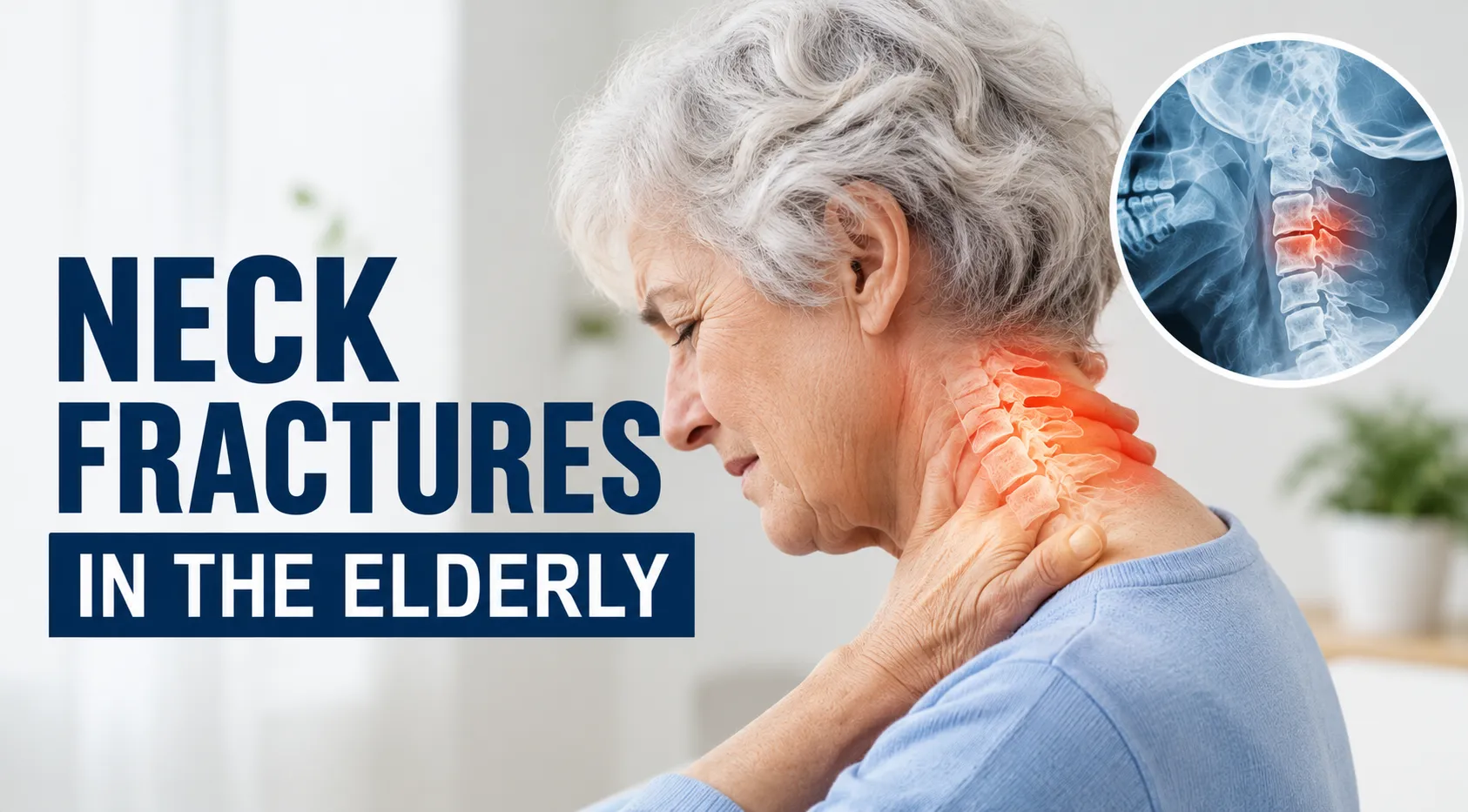

A neck fracture is a break in one or more bones in the cervical spine, the section of the spine that supports the head and protects the spinal cord in the neck.
Neck fractures can occur at any age, but they can be serious in older adults. Age-related changes in bone strength, balance, mobility, and spinal structure can increase the consequences of an injury that might otherwise seem relatively minor.
A fall that would not normally cause a major spinal injury can sometimes result in a cervical spine fracture in an older person, particularly when osteoporosis or other factors affecting bone strength are present. In older adults, fractures frequently involve the upper cervical spine, particularly the second cervical vertebra (C2), including odontoid fractures.
Because the cervical spine contains the spinal cord and important nerves, a suspected neck fracture should be assessed promptly.
What Is a Neck Fracture?
The cervical spine consists of seven vertebrae, labelled C1 to C7.
A fracture can occur in different parts of these vertebrae and can vary considerably in severity.
Some fractures are stable, while others can destabilise the spine or put the spinal cord or nerve roots at risk.
The type and location of the fracture are important because they influence the appropriate treatment.
In older adults, fractures can also occur in the upper cervical spine, including the first two cervical vertebrae.
Why Are Neck Fractures More Concerning in Older People?
Several age-related factors can affect the risk and consequences of cervical spine fractures.
Reduced Bone Strength
Osteoporosis can reduce bone density and make bones more vulnerable to fracture.
This means that a relatively low-energy injury, such as a fall from standing height, can sometimes cause a significant spinal fracture.
Changes in the Spine With Age
The spine changes naturally with age.
Degenerative changes can affect the discs, joints and ligaments and can alter the flexibility and biomechanics of the cervical spine.
Balance and Falls
Older adults may have a higher risk of falling because of factors such as reduced balance, muscle weakness, visual problems or certain medications.
A fall can result in significant trauma to the cervical spine.
Pre-existing Spinal Conditions
Some older adults have conditions that alter the structure or stability of the cervical spine.
This can affect the type of fracture that occurs and how it needs to be treated.
What Causes Neck Fractures in the Elderly?
Falls are an important cause of cervical spine fractures in older adults.
Other causes can include:
- Road traffic accidents
- Falls from a height
- Direct blows to the head or neck
- Sports or recreational injuries
In people with reduced bone strength, however, the amount of trauma required to fracture a vertebra may be considerably less.
This is why a fall that seems minor should not automatically be dismissed if an older person develops new neck pain afterwards.
Older adults are more likely to sustain fractures involving the upper cervical spine, particularly C1 and C2. Degenerative changes in the lower cervical spine can alter how forces are transmitted during a fall, potentially increasing stress at the upper cervical levels.
What Are the Symptoms of a Neck Fracture?
Symptoms can vary depending on the type and severity of the fracture.
Possible symptoms include:
- Neck pain
- Neck stiffness
- Pain that increases with movement
- Tenderness around the neck
- Headache
- Reduced neck movement
- Pain spreading into the shoulders or arms
- Numbness or tingling
- Weakness in the arms or legs
Some older adults may have relatively subtle symptoms despite having a significant cervical spine injury.
This is one reason why a suspected spinal injury following a fall or other trauma requires appropriate medical assessment.
Can an Elderly Person Have a Neck Fracture Without Severe Pain?
Yes.
Pain severity does not necessarily indicate the severity of a spinal injury.
Older adults may have other conditions, cognitive impairment or communication difficulties that make symptoms harder to identify.
A person may also minimise their symptoms after a fall.
If there has been trauma followed by new neck pain, neurological symptoms or a change in mobility, medical assessment is important.
What Should You Do If an Older Person Falls and Has Neck Pain?
If a neck fracture is suspected following an injury, the person should be treated as having a potential spinal injury until they have been assessed.
Avoid unnecessarily moving the neck.
If the person has severe neck pain, neurological symptoms, loss of consciousness or other significant injuries, emergency medical assistance should be sought.
Do not attempt to straighten or manipulate the neck yourself.
The appropriate emergency response depends on the circumstances and the person’s symptoms.
What Are the Warning Signs of Spinal Cord Injury?
A cervical spine fracture can sometimes affect the spinal cord or nerve roots.
Symptoms that require urgent medical assessment include:
- New weakness in the arms or legs
- Numbness or loss of sensation
- Tingling affecting the limbs
- Difficulty walking
- Loss of coordination
- Problems controlling the bladder or bowel
- Severe or worsening neck pain following trauma
- Difficulty breathing following a significant neck injury
A person with these symptoms should receive urgent medical attention.
How Is a Neck Fracture Diagnosed?
Diagnosis begins with a clinical assessment, including the circumstances of the injury, symptoms, neurological examination and relevant medical history. X-rays
X-rays
Plain X-rays have a limited role in the initial assessment of suspected cervical spine fractures in older adults because important injuries may be missed. They may still be used selectively during follow-up to assess alignment or stability.
CT Scan
CT is generally the preferred imaging investigation when cervical spine imaging is indicated in an older adult following trauma. It is more sensitive than plain X-rays for detecting cervical spine fractures and provides detailed information about fracture morphology, displacement and alignment.
According to NICE guidance, age 65 years or above is a high-risk factor within the Canadian C-spine rule, although the decision to image must follow the relevant clinical assessment pathway.
MRI
MRI provides detailed images of soft tissues and can show structures such as the spinal cord, discs and ligaments.
It is also used when there are neurological symptoms or concern about spinal cord or other soft-tissue injury.
The appropriate imaging depends on the individual circumstances.
How Are Neck Fractures Treated in Older Adults?
Treatment depends on the type and stability of the fracture, the person’s neurological status, bone quality, general health and other factors.
Some fractures can be managed without surgery, while others require an operation.
An odontoid fracture is a break involving a bony projection from the second cervical vertebra (C2), known as the odontoid process or dens.
These fractures are particularly important in older adults and can occur following relatively minor trauma, including falls from standing height.
Type II odontoid fractures occur near the base of the odontoid process and can be associated with a higher risk of non-union, where the fracture does not heal with solid bony fusion.
Treatment may involve a rigid cervical collar or surgical stabilisation, depending on fracture displacement, stability, the patient’s overall health and other factors.
In some older patients, a stable fibrous union without complete bony fusion may provide an acceptable clinical outcome. Therefore, treatment decisions should consider pain, neurological function, mobility and quality of life rather than X-ray findings alone.
Non-Surgical Treatment
Depending on the fracture, non-surgical management may involve:
Immobilisation
A cervical collar or other support
Pain management
Monitoring
Follow-up imaging
Rehabilitation
The type and duration of immobilisation should be determined by the treating medical team.
A collar is not appropriate for every neck injury and should not be used as a substitute for medical assessment.
Although cervical collars can provide appropriate immobilisation for selected fractures, prolonged use may be associated with complications, particularly in frail older adults. These can include skin pressure injuries, swallowing difficulties, discomfort and reduced mobility.
The benefits of immobilisation must therefore be balanced against these risks, with regular clinical review and an individualised treatment plan.
Surgery
Surgery may be considered when a fracture is unstable, significantly displaced, threatens the spinal cord or cannot be adequately managed with non-surgical treatment.
The decision also depends on fracture type, the likelihood of healing without surgery, neurological status, bone quality, frailty, other medical conditions and the patient’s preferences.
For certain fractures, particularly type II odontoid fractures, surgery may improve the likelihood of bony union. However, it also carries operative and anaesthetic risks, which must be considered carefully in older adults.
There is no single treatment approach that is appropriate for every older patient with a cervical spine fracture.
Does Every Neck Fracture Need Surgery?
No.
The presence of a cervical spine fracture does not automatically mean that surgery is required.
Some fractures are stable and can be treated with immobilisation and monitoring.
Others may require surgical stabilisation because of instability, displacement, neurological involvement or failure of non-surgical treatment.
The specific fracture pattern is therefore crucial to treatment planning.
Why Is Bone Health Important After a Neck Fracture?
In an older adult, a fracture following relatively minor trauma can sometimes indicate underlying reduced bone strength.
Osteoporosis does not always cause symptoms before a fracture occurs.
Following a fracture, clinicians may therefore consider whether the person needs assessment of their bone health and advice about reducing future fracture risk.
This can involve assessment of factors such as:
- Previous fractures
- Bone density
- Nutrition
- Physical activity
- Falls risk
- Other medical conditions
- Medicines that affect bone health
Management of bone health is an important part of reducing the risk of future fractures.
What Is Recovery Like After a Neck Fracture?
Recovery varies substantially depending on the fracture and treatment.
Factors that can influence recovery include:
- The location of the fracture
- Stability of the injury
- Whether the spinal cord or nerves were affected
- Age and general health
- Bone quality
- Treatment used
- Other injuries
- Pre-existing mobility problems
Some people recover with non-surgical treatment, while others require surgery followed by rehabilitation.
Recovery should therefore be assessed individually rather than based on a fixed timeframe.
Successful recovery does not always require complete radiographic bony union. In selected older patients, particularly those with odontoid fractures, a stable fibrous union may be compatible with acceptable pain control and functional recovery.
However, persistent instability, worsening pain or neurological deterioration requires further specialist assessment.
What Happens After Treatment?
Follow-up is important after a cervical spine fracture.
Depending on the injury, follow-up may involve:
- Repeat imaging
- Monitoring fracture healing
- Assessment of neck movement
- Review of neurological symptoms
- Gradual return to activity
- Physiotherapy or rehabilitation where appropriate
- Management of bone health and falls risk
The treating team will advise when it is appropriate to increase activity.
Can an Older Person Return to Normal Activities After a Neck Fracture?
Many people can return to meaningful daily activities after recovering from a neck fracture, but the extent and timing of recovery depend on the injury.
Activities may need to be increased gradually.
Someone who has undergone surgery or prolonged immobilisation may also need rehabilitation to rebuild strength, mobility and confidence.
A previous fracture does not necessarily mean a person must permanently avoid normal activity.
However, follow activity restrictions until the treating team confirms that the spine is sufficiently healed and stable.
What Complications Can Occur?
Cervical spine fractures can have serious complications, particularly when the spinal cord or major nerves are affected.
Potential complications include:
- Spinal cord injury
- Nerve injury
- Persistent neck pain
- Reduced neck movement
- Difficulty with mobility
- Problems related to fracture healing
- Complications associated with prolonged immobilisation
- Surgical complications where an operation is required
The risks vary according to the injury and the treatment used.
Older adults may also be more vulnerable to complications associated with reduced mobility and other medical conditions.
When Is a Neck Fracture an Emergency?
Cervical spine fractures can have serious complications, particularly when the spinal cord or major nerves are affected.
Potential complications include:
- Spinal cord injury
- Nerve injury
- Persistent neck pain
- Reduced neck movement
- Difficulty with mobility
- Problems related to fracture healing
- Complications associated with prolonged immobilisation
- Surgical complications where an operation is required
The risks vary according to the injury and the treatment used.
Older adults may also be more vulnerable to complications associated with reduced mobility and other medical conditions.
How Can Neck Fractures Be Prevented in Older Adults?
Not every cervical spine fracture can be prevented, but reducing falls risk and maintaining bone health can help reduce the risk of serious injury.
Useful measures may include:
Addressing Falls Risk
Falls prevention can involve reviewing:
Balance
Muscle strength
Vision
Footwear
Home hazards
Medicines
Mobility aids where appropriate
Maintaining Bone Health
Adequate nutrition, physical activity and appropriate assessment for osteoporosis can form part of a broader approach to fracture prevention.
People with previous fragility fractures may benefit from discussing bone health with their GP or healthcare team.
Staying Physically Active
Appropriate physical activity can help maintain strength, balance and mobility.
The type and level of exercise should be appropriate for the individual’s health and physical abilities.
When Should an Older Person See a Spinal Specialist?
Specialist assessment may be appropriate when a cervical spine fracture is complex, unstable, associated with neurological symptoms or requires consideration of surgical treatment.
A spinal specialist can review the clinical findings and imaging and determine whether the injury can be managed conservatively or whether surgical stabilisation should be considered.
The decision is based on the specific fracture rather than age alone.
Neck Fractures in the Elderly: Key Points
A neck fracture in an older adult should always be taken seriously because the cervical spine protects the spinal cord and important nerves.
Remember:
- A relatively minor fall can sometimes cause a significant fracture in someone with reduced bone strength.
- The severity of pain does not always reflect the severity of the injury.
- New weakness, numbness or difficulty walking after an injury requires urgent assessment.
- CT and, where appropriate, MRI can provide important information about the injury.
- Not every cervical spine fracture requires surgery.
- Treatment depends on fracture stability, displacement, neurological involvement, bone quality and overall health.
- Bone health and falls prevention are important after a fracture.
Conclusion
Neck fractures in older adults can range from stable injuries that heal with non-surgical treatment to complex fractures requiring surgical stabilisation.
Because symptoms can sometimes be less obvious than expected, a fall followed by new neck pain or neurological symptoms should not be ignored.
Early medical assessment allows the injury to be properly diagnosed and helps determine whether immobilisation, monitoring, rehabilitation or surgery is appropriate.
References
- NICE NG41. Spinal injury: assessment and initial management. NICE guidance
- NICE NG100. Rheumatoid arthritis in adults: management is not directly relevant here; instead use NICE CG146, Osteoporosis: assessing the risk of fragility fracture. NICE osteoporosis guidance
- NICE NG232. Head injury: assessment and early management, relevant where cervical injury accompanies head trauma. NICE head injury guidance
- Systematic review and meta-analysis (2023). Nonoperative versus operative management of type II odontoid fracture in older adults. Use this to support the discussion of union rates, mortality and complications, while acknowledging observational evidence and selection bias.
Disclaimer
This article is for general information only and does not replace medical advice. If you are concerned about your symptoms, speak to a healthcare professional.