
Spinal Lumbar Decompression Surgery: How Serious Is It Really?
Risks, Recovery Time & What to Expect?

Introduction
Lower back pain and leg pain can be more than just an inconvenience—they can affect how you walk, sleep, and live your daily life. When treatments like physiotherapy or medication fail, spinal lumbar decompression surgery may be recommended.
But how serious is spinal decompression surgery? Is it safe? And what should you expect during recovery?
The truth is—while it is a major surgical procedure, modern techniques have made lumbar decompression surgery safer, more effective, and widely performed. Understanding the risks, benefits, and recovery timeline can help you make an informed decision.
What Is Spinal Lumbar Decompression Surgery?
Spinal decompression surgery is performed to relieve pressure on nerves in the lower (lumbar) spine. This pressure is commonly caused by conditions such as spinal stenosis or a herniated disc.
When spinal nerves are compressed, symptoms may include:
- Leg pain (sciatica)
- Numbness or tingling
- Muscle weakness
- Difficulty walking
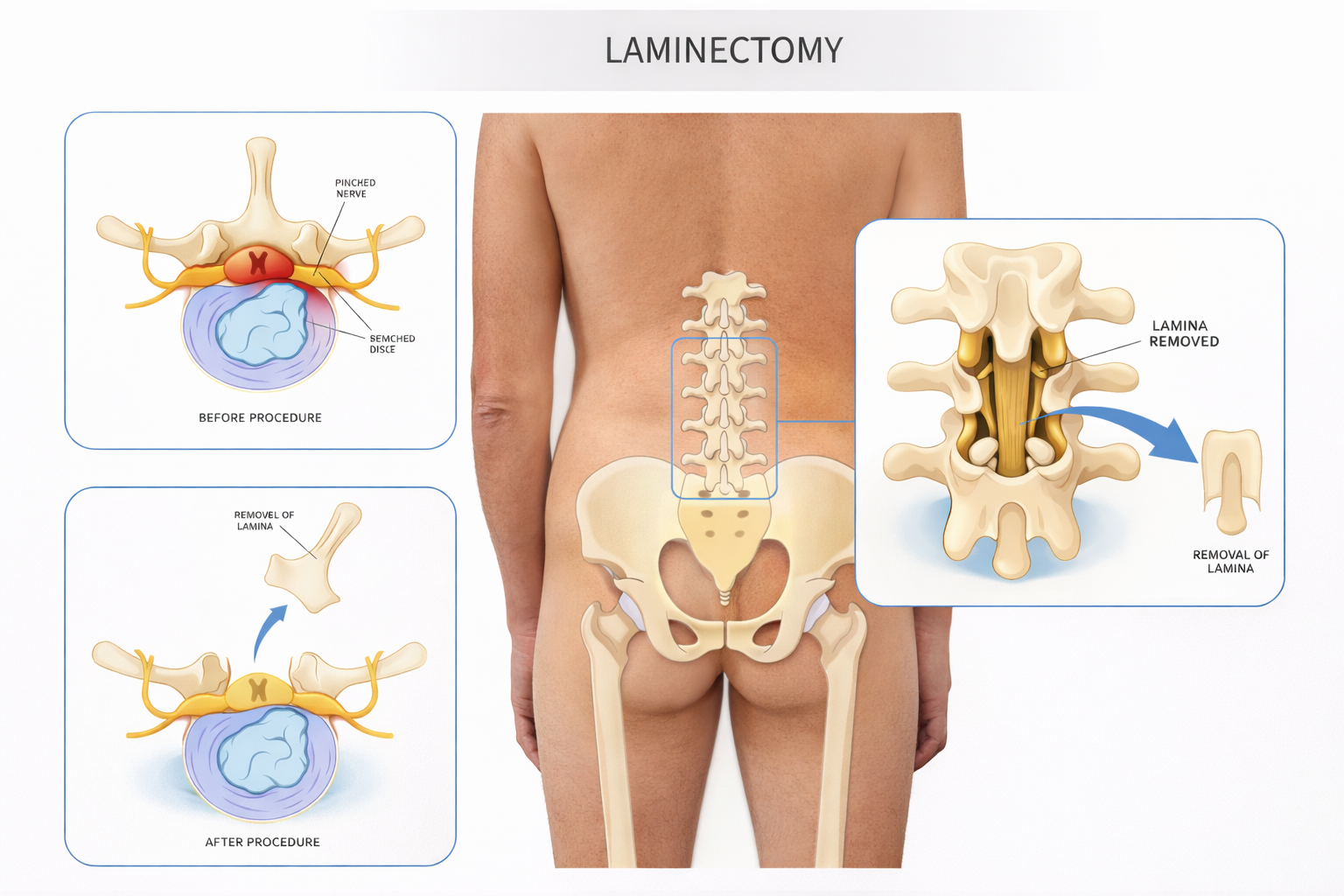
The goal of lumbar decompression surgery is to remove the source of pressure by taking away small portions of bone or disc material. Common procedures include:
- Laminectomy
- Discectomy
How Serious Is Spinal Decompression Surgery?
Spinal lumbar decompression surgery is considered a major surgery, but it is not typically high-risk for healthy individuals.
Because the procedure is performed near the spinal cord and nerves, it requires a high level of precision. However, it is also a routine operation performed by spine surgeons worldwide, often as a planned (elective) procedure rather than an emergency.
Key Factors That Affect Risk:
- Severity of the spinal condition
- Age and overall health
- Type of decompression procedure
Why Spinal Decompression Surgery Is Considered Serious
- Involves operating close to nerves and the spinal cord.
- Requires general anaesthesia.
- Carries risks associated with major surgery.
Why It’s Safer Than Ever Today
- Minimally invasive techniques reduce tissue damage.
- Shorter hospital stays.
- Lower complication rates
- Faster recovery times
For many patients, the benefits of spinal decompression surgery outweigh the risks.
Types of Lumbar Decompression Surgery
Depending on your condition, your surgeon may recommend one of the following:
- Laminectomy – Removes part of the vertebra to relieve pressure.
- Discectomy – Removes the portion of a herniated disc pressing on a nerve.
- Foraminotomy – Widens the space where nerves exit the spine.
- Spinal Fusion – Stabilises the spine (sometimes combined with decompression)
Risks of Spinal Lumbar Decompression Surgery
Like all surgical procedures, spinal decompression surgery carries some risks. These include:
- Infection
- Bleeding
- Blood clots
- Reaction to anaesthesia
- Nerve damage (rare)
In some cases, symptoms may persist or return over time. However, serious complications are uncommon, especially when performed by experienced surgeons. Other risks will be discussed in detail by your surgeon.
Benefits of Lumbar Decompression Surgery
Despite being a major procedure, the benefits can be significant:
- Relief from chronic back and leg pain
- Improved mobility and function
- Reduced nerve compression
- Better overall quality of life
Many patients report noticeable improvement shortly after surgery.
Recovery Time After Spinal Decompression Surgery
Recovery time varies depending on the individual and the type of surgery performed.
Typical Recovery Timeline:
- Hospital stay: Same day or 1–3 days
- Walking: Within 24 hours
- Light activities: 2–6 weeks
- Full recovery: 6–12 weeks
Physiotherapy is often recommended to support healing and improve strength.
When Do You Need Spinal Decompression Surgery?
Doctors may recommend surgery when:
- Non-surgical treatments have not worked.
- Pain is severe and long-lasting.
- There is nerve damage or weakness.
- Daily activities are significantly affected.
Is Spinal Decompression Surgery Worth It?
For many patients with severe symptoms, spinal lumbar decompression surgery is highly effective. It can significantly reduce pain and improve mobility.
However, it’s important to consult a spine specialist to understand your personal risks and expected outcomes.
Final Thoughts: How Serious Is It Really?
Spinal lumbar decompression surgery is serious—but not as risky as many people fear. It sits between minor procedures and high-risk operations: a major surgery that is commonly performed, well-understood, and generally safe.
For the right patient, it can be life-changing—helping restore comfort, movement, and quality of life.
Appointments
📧 contactspinecare.uk@gmail.com
📞 07771112322