
Degenerative Disc Disease: Protect Your Spine & Reduce Pain
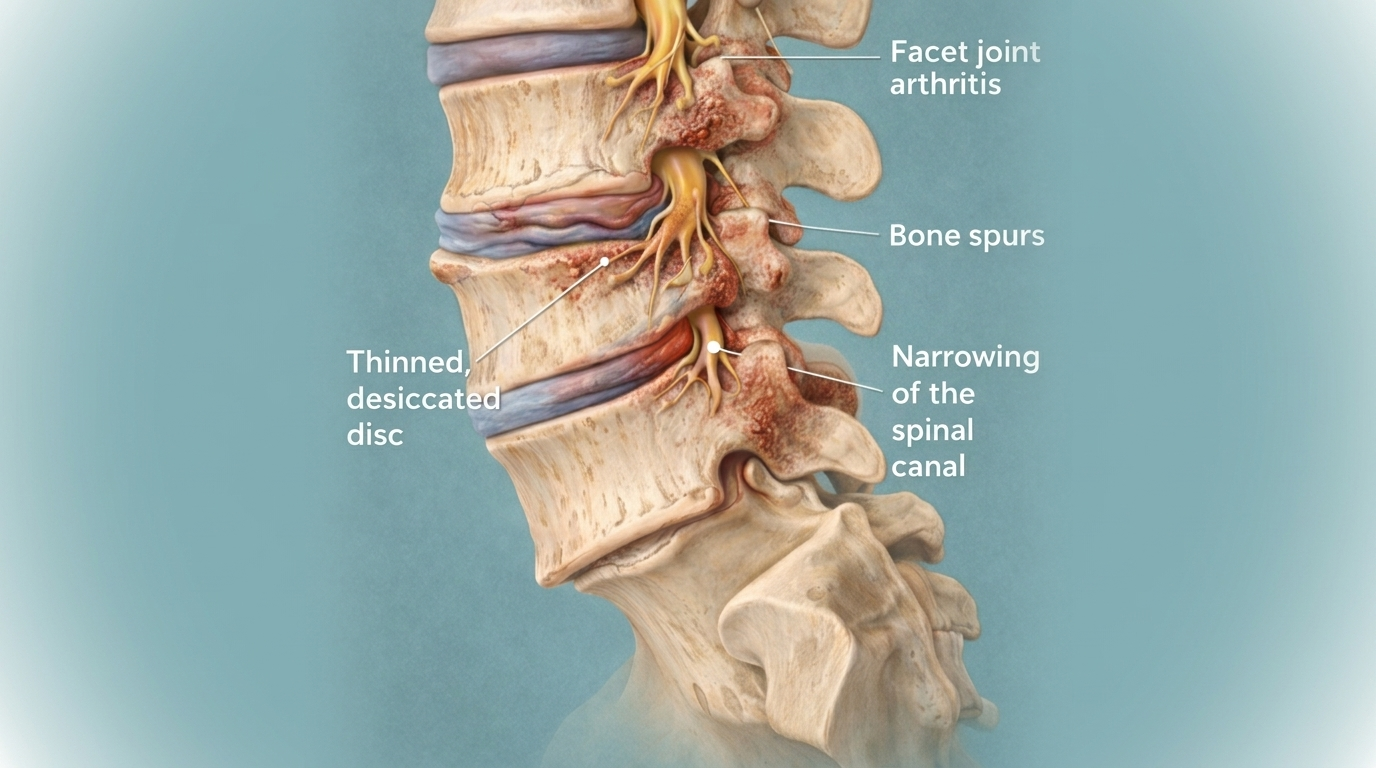

Degenerative Disc Disease (DDD) isn’t actually a “disease” in the traditional sense, it’s a condition where the discs between your spinal bones (vertebrae) gradually wear down over time.
These discs act like cushions or shock absorbers. As they lose hydration and flexibility, they become thinner and less effective, which can lead to pain or stiffness.
DDD is most commonly caused by ageing, but other factors can speed it up:
- Natural wear and tear
- Repetitive strain or heavy lifting
- Injury or trauma
- Genetics
- Smoking (reduces disc nutrition)
It most often affects the lower back (lumbar spine) or neck (cervical spine).
Living with Degenerative Disc Disease (DDD) can be challenging for some, especially if daily habits unknowingly worsen their symptoms. While treatment and exercise are important, knowing what to avoid is equally critical for managing pain and preventing further damage.
In this guide, we’ll cover the most important things to avoid with degenerative disc disease to help you stay active and pain-free.
Common symptoms
Not everyone with DDD has symptoms, but when they do, they may include:
- Persistent lower back or neck pain
- Pain that worsens with sitting or bending
- Stiffness, especially in the morning
- Pain that comes and goes
- Radiating pain into the legs (similar to sciatica)
1. Avoid Prolonged Sitting
Sitting for long periods increases pressure on the spinal discs, especially in the lower back.
What is it harmful?
- Increases disc pressure.
- Lead to muscle weakening and stiffness
- Linked to lower back pain
What to do instead:
- Take breaks every 30–45 minutes
- Use an ergonomic chair
- Maintain proper posture
2. Avoid Poor Posture
Slouching or improper posture places uneven stress on the spine. Common mistakes:
- Hunching over screens
- Sitting without back support
- Forward head posture Tip:
Keep your spine neutral and shoulders relaxed to reduce strain.
3. Avoid Heavy Lifting
Lifting heavy objects incorrectly can worsen disc degeneration or trigger flare-ups.
Risks include:
- Increased pressure on discs
- Higher chance of disc herniation
- Muscle strain Safer approach:
- Bend your knees, not your back
- Keep objects close to your body
- Avoid sudden movements
4. Avoid High-Impact Activities
High-impact exercises involve repetitive force transmitted through the body, including:
- Running and sprinting
- Jumping (e.g., basketball, HIIT workouts)
- Contact sports (e.g., rugby, football)
- Plyometric training
These activities generate ground reaction forces that travel up through the legs into the spine.
The human spine is biomechanically resilient. Intervertebral discs act as shock absorbers, helping distribute forces.
- Studies in sports medicine show that regular loading (including impact) can actually help maintain disc health and bone strength
- Moderate activity is linked to lower rates of chronic back pain
In other words, impact isn’t automatically harmful; it can be beneficial
Problems tend to arise when the impact is:
- Too frequent
- Too intense
- Poorly controlled
- Poor technique
Solution
- Build strength first
- Focus on core and hip stability.
- Strong muscles absorb impact better.
- Progress gradually
- Avoid sudden spikes in training intensity
- Increase load step-by-step
- Improve technique
- Learn proper running, jumping, and landing mechanics
- Consider professional guidance if unsure
- Listen to your body
- Pain is a signal, not something to ignore
- Modify activity during flare-ups
Better alternatives
- Walking
- Swimming
- Cycling
5. Avoid a Sedentary Lifestyle
Why:
- Weakens supporting muscles
- Reduces flexibility
- Increases stiffness. Solution:
Stay active with low-impact exercises and guided physiotherapy.
6. Avoid Smoking
Smoking has a direct negative impact on spinal health. Effects:
- Reduces blood supply to discs
- Slows healing
- Accelerates disc degeneration
Quitting smoking can significantly improve overall spine health.
7. Avoid Excess Body Weight
Carrying extra weight puts additional strain on your spine. Impact:
- Increased pressure on lumbar discs
- Higher risk of pain flare-ups
Maintaining a healthy weight can reduce stress on the spine and improve symptoms.
8. Avoid Ignoring Persistent Pain
Many people delay treatment, hoping the pain will go away on its own. Why is this risky:
- Symptoms may worsen
- Nerve damage can develop
- Treatment becomes more complex
Early intervention leads to better outcomes.
When to Seek Medical Advice
You should consult a Spine specialist if you experience:
- Persistent or worsening pain
- Numbness or tingling in limbs
- Weakness in arms or legs
- Difficulty performing daily activities
- Bowel or bladder symptoms
- Severe symptoms
Final Thoughts
Managing Degenerative Disc Disease is not just about treatment — it’s also about avoiding habits that worsen the condition.
By making simple lifestyle changes and staying consistent with care, you can:
- Reduce pain
- Improve mobility
- Prevent further degeneration
Appointments
📧 contactspinecare.uk@gmail.com
📞 07771112322