
L5 S1 Disc Bulge Symptoms: Early Signs, Causes, Diagnosis and Treatment
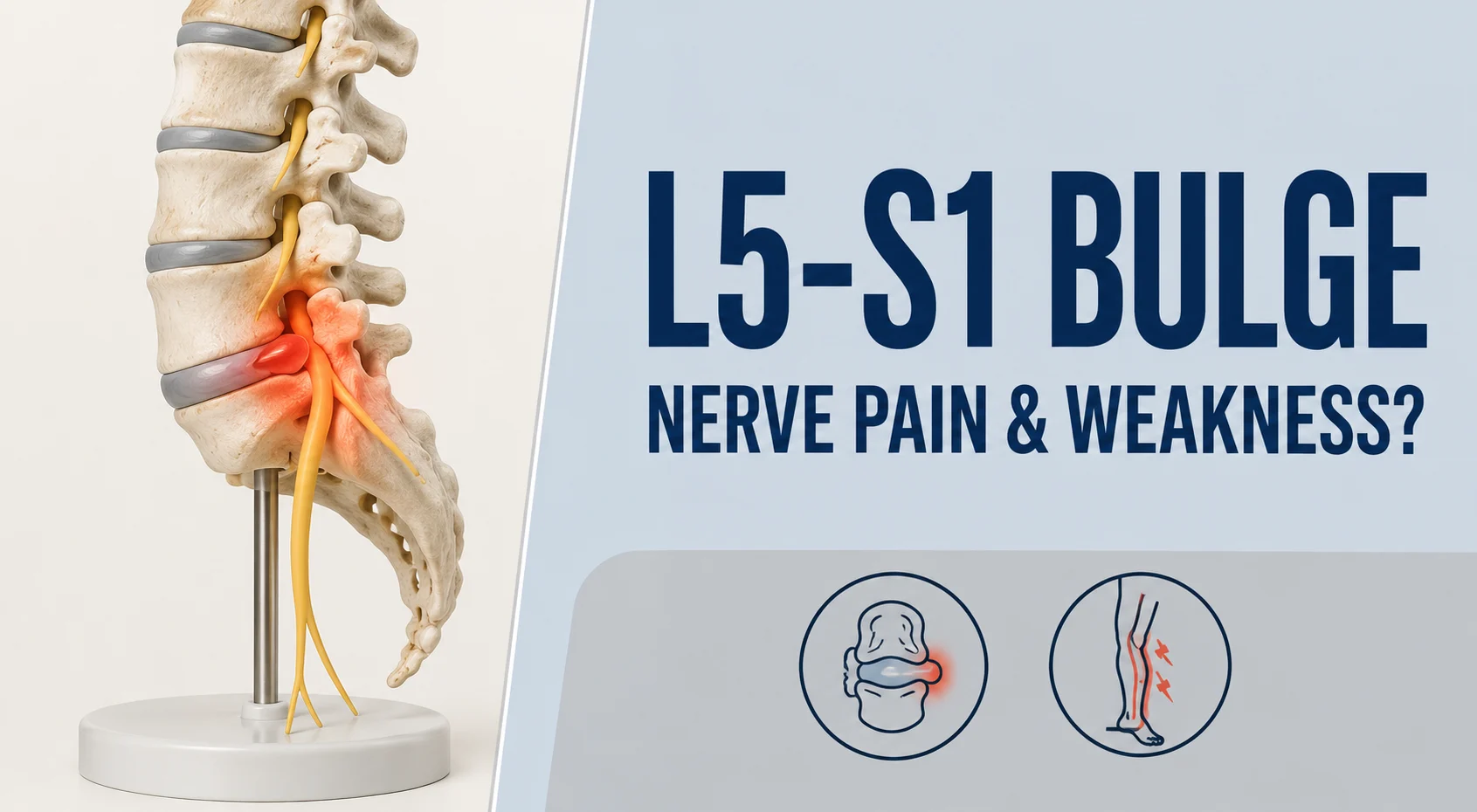

An L5 S1 disc bulge is one of the most common causes of lower back pain and sciatica. The L5 S1 disc sits at the base of the lumbar spine, where the lower back meets the sacrum (pelvis). Because this part of the spine supports much of your body weight and absorbs significant forces during everyday activities, it is particularly vulnerable to wear and tear and injury.
When the disc bulges, it may press on nearby nerve roots, causing symptoms such as lower back pain, pain travelling down the leg (sciatica), numbness, tingling, or muscle weakness. However, not everyone with an L5 S1 disc bulge experiences symptoms, and many people improve with conservative treatment.
This guide explains the common L5 S1 disc bulge symptoms, what causes them, how the condition is diagnosed, and the treatment options available in line with current UK clinical practice.
What Is an L5 S1 Disc Bulge?
The spine is made up of vertebrae separated by soft, cushion-like structures called intervertebral discs. These discs absorb shock, allow movement, and help distribute the forces placed on the spine.
The L5 S1 disc lies between the fifth lumbar vertebra (L5) and the first sacral vertebra (S1). It is one of the hardest-working discs in the body because it supports much of your upper body weight while allowing bending, twisting, and lifting.
A disc bulge occurs when the outer layer of the disc extends beyond its usual boundary. Unlike a disc herniation, where the inner gel pushes through a tear in the outer layer, a bulging disc usually remains intact but may still narrow the space around nearby nerves.
If you’d like to understand how this area of the spine works, read our guide on What Does the Lumbar Spine Do?
What Are the Symptoms of an L5 S1 Disc Bulge?
The symptoms depend on whether the bulging disc irritates or compresses nearby nerves. Some people have no symptoms at all, while others develop pain that affects daily activities.
Common symptoms include:
- Lower back pain
- Pain in one buttock
- Sciatica (pain travelling down one leg)
- Tingling or pins and needles
- Numbness in the foot or leg
- Muscle weakness
- Difficulty standing or walking for long periods
- Pain that worsens when sitting for extended periods
- Increased pain when coughing, sneezing, or straining
If you have persistent back pain and are unsure of the cause, our article on 5 Causes of Lower Back Pain explains some of the most common conditions that affect the lower spine.
Lower Back Pain
Lower back pain is often the first symptom people notice. It may develop gradually or occur after lifting something heavy or making a sudden twisting movement.
The pain may:
Be centred in the lower back
Feel dull, aching, or sharp
Become worse after prolonged sitting
Improve slightly with gentle movement
Some people experience back pain without any leg symptoms, particularly if the bulging disc has not significantly affected a nerve.
Sciatica
When an L5 S1 disc bulge compresses the sciatic nerve roots, pain may travel from the lower back into the buttock and down the leg.
Sciatica often affects only one side and may range from mild discomfort to severe burning or shooting pain.
Other symptoms may include:
Electric shock-like pain
Burning sensations
Pain extending into the calf or foot
Symptoms worsening during prolonged sitting
If you’re recovering from sciatica, you may also find our guide on Signs That Your Sciatica Is Improving helpful.
Numbness and Tingling
Pressure on a spinal nerve can interfere with sensation.
Patients commonly describe:
Pins and needles
Numb patches on the foot
Reduced sensation in the outer foot
Tingling in the toes
These symptoms may come and go or become more noticeable after sitting or standing for long periods.
Muscle Weakness
Nerve compression may also affect muscle strength.
Depending on the nerve involved, you may notice:
Difficulty standing on tiptoes(S1)
Weakness pushing the foot downwards(S1)
Reduced power during walking
Difficulty climbing stairs
Rarely, foot drop(L5 nerve root)
Progressive weakness should always be assessed promptly by a healthcare professional.
Which Nerve Is Usually Affected?
The S1 nerve root is most commonly affected by an L5 S1 disc bulge.
Symptoms of S1 Nerve Compression
These may include:
Pain down the back of the thigh and calf
Pain reaching the outer edge or sole of the foot
Numbness affecting the little toe
Difficulty standing on tiptoes
Reduced ankle reflex
In some cases, the L5 nerve root may also be affected.
Symptoms can include:
Pain along the outer thigh
Tingling over the top of the foot
Weakness lifting the foot
Difficulty walking on the heels
What Causes an L5 S1 Disc Bulge?
Several factors can contribute to an L5 S1 disc bulge.
These include:
- Age-related disc degeneration
- Repetitive lifting
- Heavy manual work
- Poor lifting technique
- Repetitive bending and twisting
- Previous spinal injury
- Smoking
- Excess body weight
- Sedentary lifestyle
Disc degeneration is a normal part of aging, but not everyone develops symptoms.
Risk Factors
You may have a higher risk if you:
- Are aged between 30 and 60
- Perform physically demanding work
- Spend long periods sitting
- Have weak core muscles
- Smoke
- Are overweight or obese
- Have a family history of disc problems
Maintaining healthy habits can reduce stress on the spine. Learn more in our article on The Impact of Lifestyle on Spinal Health.
When Should You Seek Urgent Medical Attention?
Although most L5 S1 disc bulges can be managed without emergency treatment, certain symptoms require immediate medical assessment.
Seek urgent medical help if you develop:
- Loss of bladder or bowel control
- Numbness around the buttocks or genitals (saddle anaesthesia)
- Sudden or rapidly worsening weakness in one or both legs
- Severe back pain following significant trauma
- Difficulty walking that is rapidly worsening
These symptoms may indicate cauda equina syndrome, which requires urgent treatment.
How Is an L5 S1 Disc Bulge Diagnosed?
Your clinician will begin by discussing your symptoms and medical history before performing a physical examination.
The examination may include:
Testing muscle strength
Checking reflexes
Assessing sensation
Examining walking pattern
Performing a straight leg raise test
If further investigation is needed, imaging may include:
MRI Scan
MRI is the preferred investigation because it clearly shows the discs, nerves, and surrounding soft tissues.
CT Scan
CT scanning may be recommended when MRI is not suitable or to assess the bones of the spine in greater detail.
X-rays
X-rays are not used to diagnose disc bulges but may help rule out other spinal conditions.
Treatment Options for L5 S1 Disc Bulge
Treatment depends on the severity of symptoms and how much the condition affects your daily life.
Conservative Management
Most people improve without surgery.
Treatment may include:
Staying active where possible
Physiotherapy
Pain relief medication
Activity modification
Advice on posture and lifting techniques
Physiotherapy
A physiotherapist may recommend:
Core strengthening exercises
Stretching
Mobility exercises
Postural correction
Gradual return to normal activities
Medication
Depending on your symptoms, treatment may include:
Pain relief medicines
Anti-inflammatory medication (if appropriate)
Medicines used for nerve-related pain in selected patients
Your healthcare professional will advise which option is suitable for you.
Epidural Steroid Injections
If leg pain persists despite conservative treatment, an epidural steroid injection may be considered to reduce inflammation around the affected nerve root.
Read more about this option in Do I Need an Injection for a Prolapsed Lumbar Disc?
When Is Surgery Considered?
Surgery is usually considered only when:
- Symptoms remain severe despite appropriate non-surgical treatment
- Significant muscle weakness develops
- Pain continues to affect everyday activities
- Cauda equina syndrome is suspected
The most common operation is a microdiscectomy, where the surgeon removes the portion of the disc pressing on the nerve while preserving as much healthy disc tissue as possible.
If you’re unsure whether surgery is necessary, our article Slipped Disc – Do I Need to Worry? explains when specialist assessment may be appropriate.
Recovery and Outlook
Many people notice gradual improvement within several weeks, although recovery times vary depending on:
- The severity of nerve compression
- General health
- Activity levels
- Participation in rehabilitation
Those who undergo surgery often experience earlier relief of leg pain, although complete recovery can take several months.
Self-Care and Prevention
You can support your recovery and reduce the risk of future disc problems by:
- Remaining physically active
- Strengthening your core muscles
- Maintaining a healthy weight
- Avoiding smoking
- Using safe lifting techniques
- Taking regular breaks from prolonged sitting
If you’re planning to return to work after a disc problem, our guide Can You Work with a Disc Problem? provides practical advice.
When to Seek Medical Advice
Arrange an appointment with your GP or healthcare professional if:
- Lower back pain lasts longer than six weeks
- Pain travels below the knee
- You experience numbness or tingling
- Leg weakness develops
- Your symptoms are becoming progressively worse
- Pain interferes with work, sleep, or daily activities
If you are living with persistent symptoms, you may also find practical advice in Living with Chronic Back Pain: Coping Strategies and Support.
Conclusion
An L5 S1 disc bulge is a common spinal condition that can cause lower back pain, sciatica, numbness, tingling, or weakness when nearby nerves become compressed. Although these symptoms can be worrying, many people recover with conservative treatments such as physiotherapy, activity modification, and appropriate pain management.
Early assessment is important if symptoms persist, worsen, or are accompanied by muscle weakness or changes in bladder or bowel function. A healthcare professional can identify the underlying cause and recommend the most appropriate treatment based on your individual circumstances.
Mr Prasad Karpe
Specialising in cervical radiculopathy, slipped discs, spinal stenosis, and minimally invasive spinal surgery across the North East of England.
Disclaimer
This article is for informational purposes only and does not replace professional medical advice, diagnosis, or treatment. Work ability and activity recommendations vary depending on the severity of symptoms and the underlying spinal condition.